The Story of a Food Forest
Every natural landscape begins with a set of conditions that can’t be repeated. A place, a climate, a community, a need. While shared principles guide the way we work with nature, no landscapes are ever the same. Each one responds to its surroundings, its people, and the intentions behind it, unfolding over time rather than being imposed all at once.
For thousands of years, these landscapes have been places where humans and other life forms meet — to gather, rest, observe, move, and coexist. Forests operate on their own tempo, inviting patience, curiosity, and presence. In that rhythm, food forests offer more than oxygen and harvestable yields. they support movement, attention, emotional balance, and a renewed sense of connection. Through food forest understand, we’ve learned how plants support and recover alongside one another — and it leaves us with an important question: what is our role within that living network?
dive deeper on the science behind food forests
Across history, many ancestral civilizations shaped landscapes as living food systems resembling what we now call food forests. In Mesoamerica, Indigenous Maya communities managed layered agroforestry systems of fruit trees, cacao, roots, and medicinal plants beneath partial forest canopies. These were intentionally tended ecosystems that produced food and materials while sustaining soil fertility and biodiversity over long periods.
Before Control, There Was Trust
Long before techniques were formalised or systems were named, some growers began to notice something quietly radical:
the land was already doing most of the work.
When intervention slowed, life organised itself.
When disturbance decreased, diversity increased.
Weeds became signals. Insects became messengers.
Soil stopped being a medium to manage and started behaving like a living intelligence.
This way of growing did not reject knowledge — it rejected excess.
It questioned the need to improve what was already functioning.
It asked whether effort always equalled progress, and whether productivity had been mistaken for understanding.
What emerged was not a method, but a posture:
to step back, to observe longer, to act less — and to trust that life, given space, tends toward balance.
From this threshold came a voice that did not seek to instruct, but to unsettle assumptions —
not by adding complexity, but by removing it.

but the cultivation and perfection of human beings.”
What is often missing is inspiration, orientation, and vision: a way to see what is possible and feel confident enough to begin. Bridging this gap is essential. Food forests do not start with mastery; they start with curiosity, observation, and simple, understandable steps. By simplifying the entry point — without reducing the depth — we create pathways that invite people in, rather than overwhelm them, allowing learning to unfold naturally as experience grows.
Fukuoka reminds us that growing food is ultimately about cultivating human understanding. Bill Mollison then brings that insight down to earth by showing that complexity does not require complicated solutions. Today, we have access to powerful tools, design frameworks, and scientific knowledge to build food forests, permaculture systems, and syntropic gardens. Yet for many people, the real challenge comes earlier — before courses, before technical language, before soil chemistry or system diagrams.
When Patterns Began to Speak
As landscapes grew more complex, it became clear that no single technique could explain what was happening.
Diversity did not behave randomly.
Edges mattered. Feedback loops repeated. Certain arrangements created resilience while others collapsed.
What people were witnessing was not chaos — it was pattern.
Forests, villages, waterways, and societies all followed similar rules.
Energy flowed along predictable paths. Waste re-entered systems as nourishment. Stability emerged not from control, but from intelligent relationships.
This understanding demanded a different kind of thinking — one that stepped back far enough to see wholes instead of parts.
It called for a language capable of describing living systems across scales, from soil microbes to human settlements.
From this moment came a framework — not to dictate outcomes, but to help people design with nature rather than against it.
the solutions remain embarrassingly simple.”
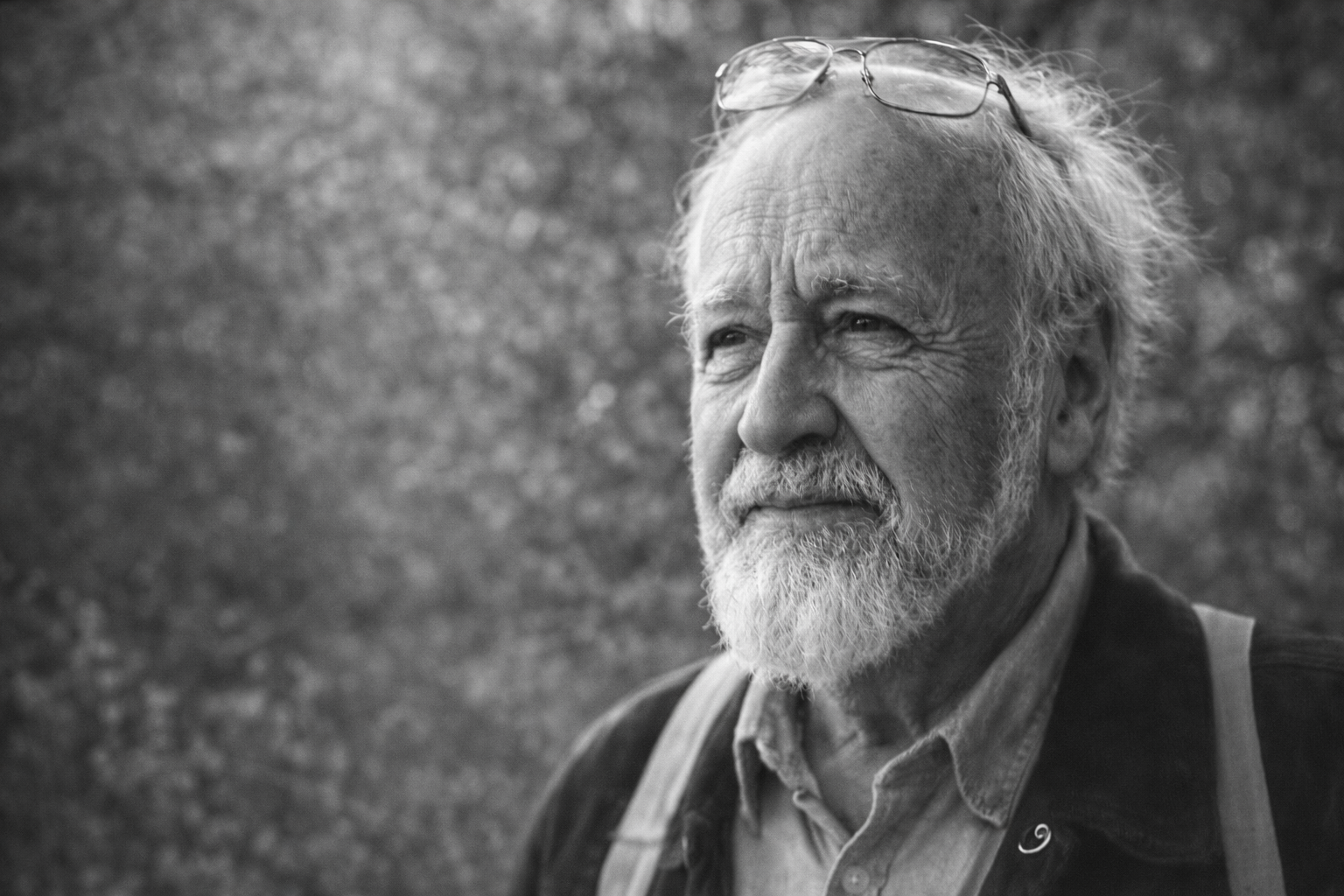
When we look closely at living systems, a different approach begins to emerge. Rather than forcing outcomes or imposing rigid designs, lasting abundance comes from understanding how landscapes already function and working in cooperation with those patterns. Water, soil, climate, and living organisms are not obstacles to overcome, but forces to be read, respected, and aligned with.
This shift changes the role of the grower from controller to participant. Progress comes not from constant intervention, but from observation, timing, and small, responsive actions. When human intention works alongside natural processes instead of against them, landscapes often respond with resilience, productivity, and balance — not as a reward for control, but as a natural outcome of cooperation.
When Limits Were Re-examined
Some landscapes were written off as impossible.
Too cold. Too steep. Too degraded. Too extreme.
Yet in these places, life persisted — adapting, negotiating, finding niches where none were supposed to exist.
The question shifted from “Can this land be made productive?”
to “What does this land want to become?”
Instead of forcing crops into compliance, attention turned to microclimates, water movement, and terrain itself as an ally.
Slopes gathered heat. Stones stored energy. Animals became partners rather than problems.
What emerged was a willingness to work with extremes — not to tame them, but to amplify their hidden advantages.
Rules dissolved when observation replaced assumption.
From this edge came a practice rooted in bold experimentation —
one that treated landscapes as collaborators and trusted abundance to emerge from understanding place deeply.
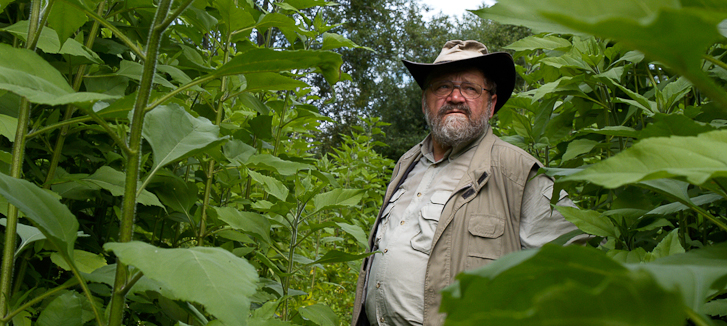
This perspective shifts food forest design away from forceful intervention and toward practical alignment. Rather than imposing control, the focus becomes creating the conditions in which plants, soils, and living systems can organize themselves. Progress is measured not by how much we manipulate a landscape, but by how effectively we reduce resistance — allowing natural processes such as succession, nutrient cycling, and regeneration to do the heavy lifting.
In practice, this means working gently and intelligently: shaping water once instead of fighting it repeatedly, choosing plants that suit the site rather than reshaping the site to suit plants, and using observation to guide timing rather than urgency. The result is a food forest that grows stronger with time, requires less correction, and supports both ecological health and human participation without aggression or exhaustion.
When Knowledge Needed to Travel
When Understanding Needed Ground
As these ideas took shape, they needed more than explanation — they needed land.
Not theory alone, but places where patterns could be seen, walked, and tested over time.
Where water moved, trees matured, soils changed, and mistakes remained visible.
Learning returned to demonstration.
Design became something observed in motion — not abstracted, not simplified, not detached from consequence.
What mattered now was continuity:
showing how principles behave across seasons, climates, and scales —
and how patient application turns insight into landscape.
From this stage emerged a way of teaching rooted in practice —
where understanding grows by standing in the system itself.
but to create conditions where nature thrives.”
Keep reading
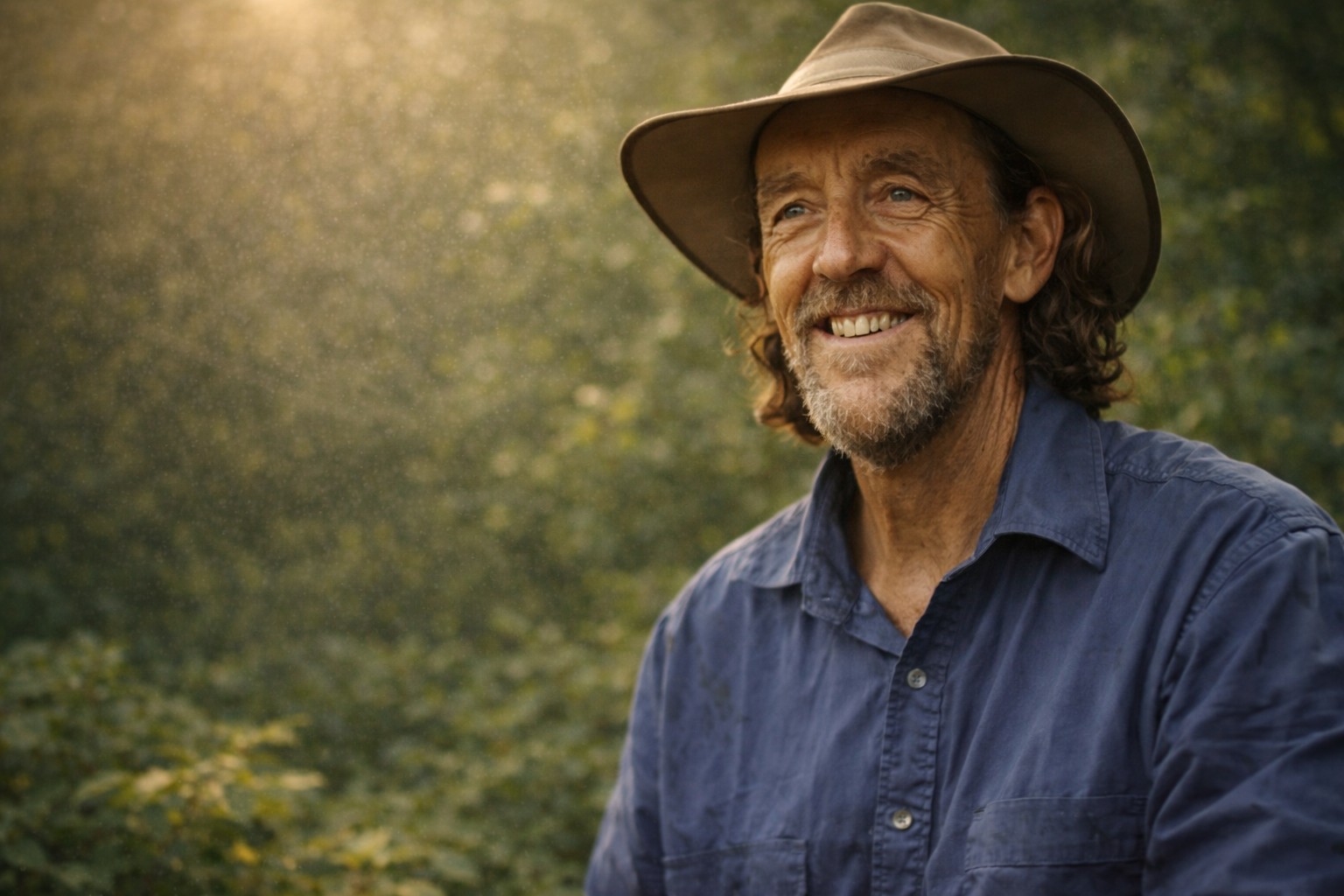
With deep gratitude, we acknowledge the thinkers, practitioners, and teachers whose work has shaped the Food Forest story. Men such as Masanobu Fukuoka, Sepp Holzer, Bill Mollison, and Geoff Lawton have contributed far more than techniques for growing food. Their work points toward a deeper understanding of land, responsibility, and relationship — a vision for a greener, safer, and more harmonious world. This movement goes beyond gardening; it is a living cause rooted in care, observation, and cooperation with nature.